

Origami has shaped the way I think for as long as I can remember. I didn’t realize it at the time, but years of folding taught me how to visualize problems, recognize structure, and approach things step by step. Those habits turned into real problem-solving and critical-thinking skills, and they carried into school, especially in math and anything that involved spatial reasoning.
Teaching origami is my way of passing that on. I want other people to experience the same clarity and creative problem-solving that folding gave me, whether it’s at conventions, in my school’s origami club, or in the programs I run around my community.

Project VisMO is a research-based origami and geometry program developed by faculty at the University of San Diego and funded by the National Science Foundation. I first learned about it through OrigamiUSA’s newspaper The Paper, and their approach to teaching spatial thinking immediately clicked with me. It lined up almost exactly with how I had learned and how I already saw younger students respond when I taught. I reached out soon after and began teaching their curriculum in my community, supported by a Contribution Project Cincinnati grant that funded all materials for my workshops. I’ve also been working with the VisMO team to find new ways to share the program with more students.
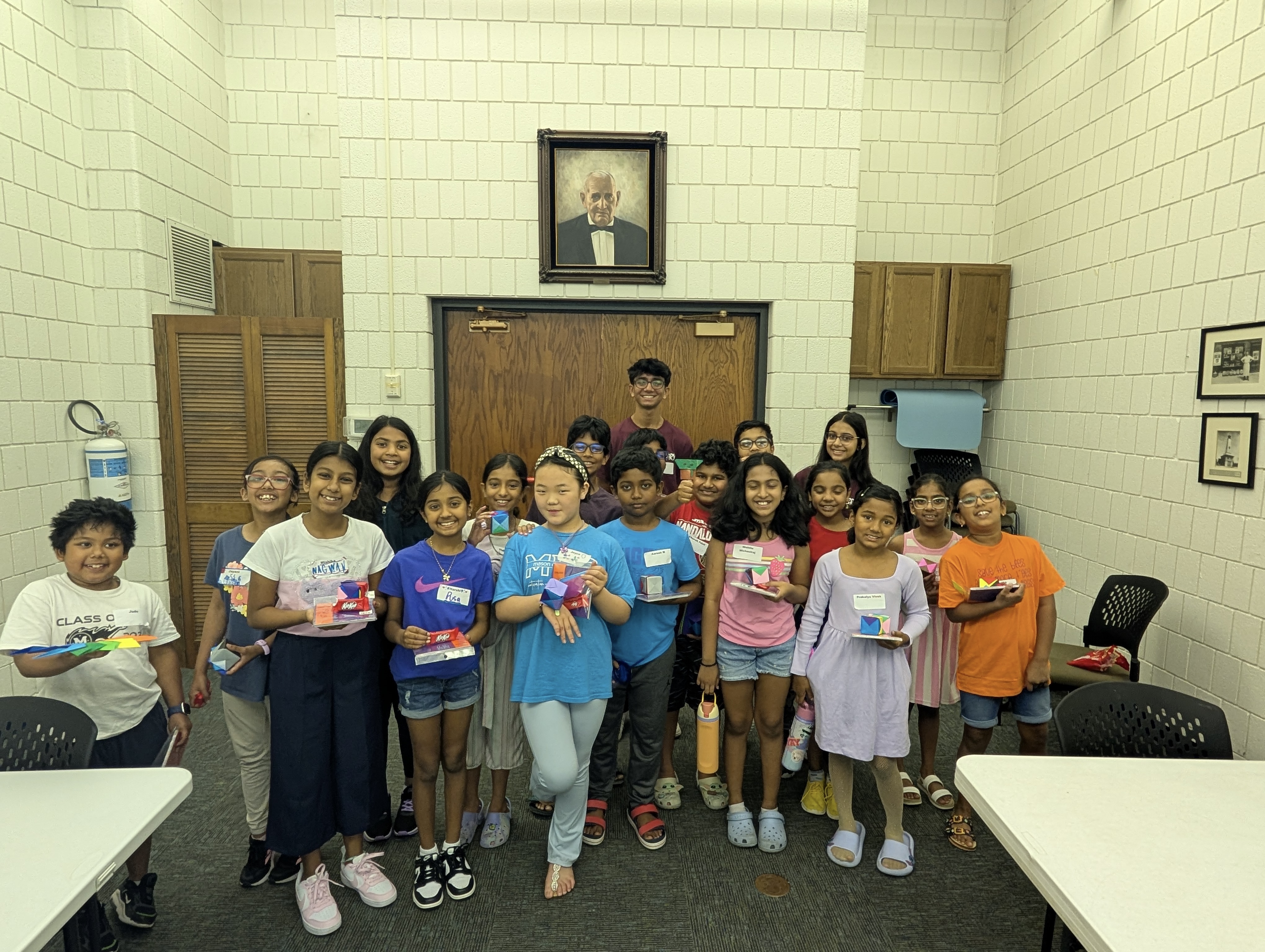
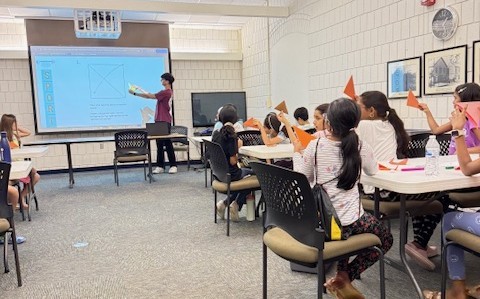
I’ve taught the VisMO curriculum through week-long summer camps at my local library (two in 2025, one in 2026), with 25 students in each session. Each day introduced a new part of the curriculum and used folding to build spatial reasoning, geometry skills, and confidence with math. I taught the sessions along with a helper from my high school’s origami club, which made it easier to work with students one-on-one. Most students came in with little experience, but by the end of the week their visual reasoning and problem-solving skills had noticeably grown.
Alongside teaching, I intern with Dr. Myers’ team at the University of San Diego’s Jacobs Institute, helping refine the VisMO curriculum. I share workshop feedback, test new activities, and support the shift to in-person programs, training new instructors over Zoom. I also develop original curriculum content by designing new models and lesson sequences, and contribute to diagramming, origami design, and rebranding.

OrigamiUSA is the largest origami organization in the world, founded in 1980 and now home to over 3,000 members around the world. It’s one of the most active and influential communities of folders, teachers, and designers today.
The OrigamiUSA Junior Board brings younger voices into the organization and gives us a real role in shaping how the community grows. As a selected member, I help make origami more accessible for students, contribute to youth-focused programs, and share ideas with the Senior Board about what younger folders need. I applied because I want younger folders to have the opportunities and support I wish I had when I was getting started.

Origami University was a monthlong online event the Junior Board created as our first major project, with over 300 attendees. It runs across four themed weekends in March and April, covering representational, geometric, and STEM-focused origami through classes, lectures, and community time.
I work on the STEM programming and help with the website and content side of the event. Our goal is to make Origami University a welcoming place for new folders while still giving more experienced folders something deeper to explore.
Ever since I discovered OrigamiUSA and its vibrant community, I’ve been drawn to its annual convention—so much so that I convinced my parents to take me in 2019, and I’ve attended every year since. As I got deeper into design, I began teaching classes there, sharing some of my models and walking people through how they’re put together. It’s an environment filled with creativity and new ideas, and every year I leave with new techniques, inspiration, and connections.
.jpeg)
OrigamiUSA 2025 Convention
As I became more involved in the origami community, I learned about the many conventions held around the country and was especially drawn to the Origami Club at MIT. In 2024, I attended my first OrigaMIT convention and had the opportunity to teach one of my own designs, sharing both the model and the design process behind it.

OrigaMIT 2024
I helped start my high school’s Origami Club to create a space for students to fold, learn new models, and explore design. We meet twice a month, covering everything from beginner folds to modular structures and simple design challenges.
Recently, I’ve expanded that community beyond the school by connecting members to the Cincinnati Origami Club, hosted monthly at a local art gallery, growing a broader, citywide space for learning, collaboration, and sharing origami.
At our local senior center, we host regular origami lessons designed to teach simple, enjoyable models. These sessions are focused on making origami accessible and fun, with step-by-step guidance to help seniors improve dexterity and engage in a creative activity.

At our local library, we offer origami workshops open to all kids interested in learning. These sessions provide a fun, hands-on way for children to explore creativity and improve their problem-solving skills. It’s usually many kids’ first time folding, and watching them pick it up so quickly is always fun.

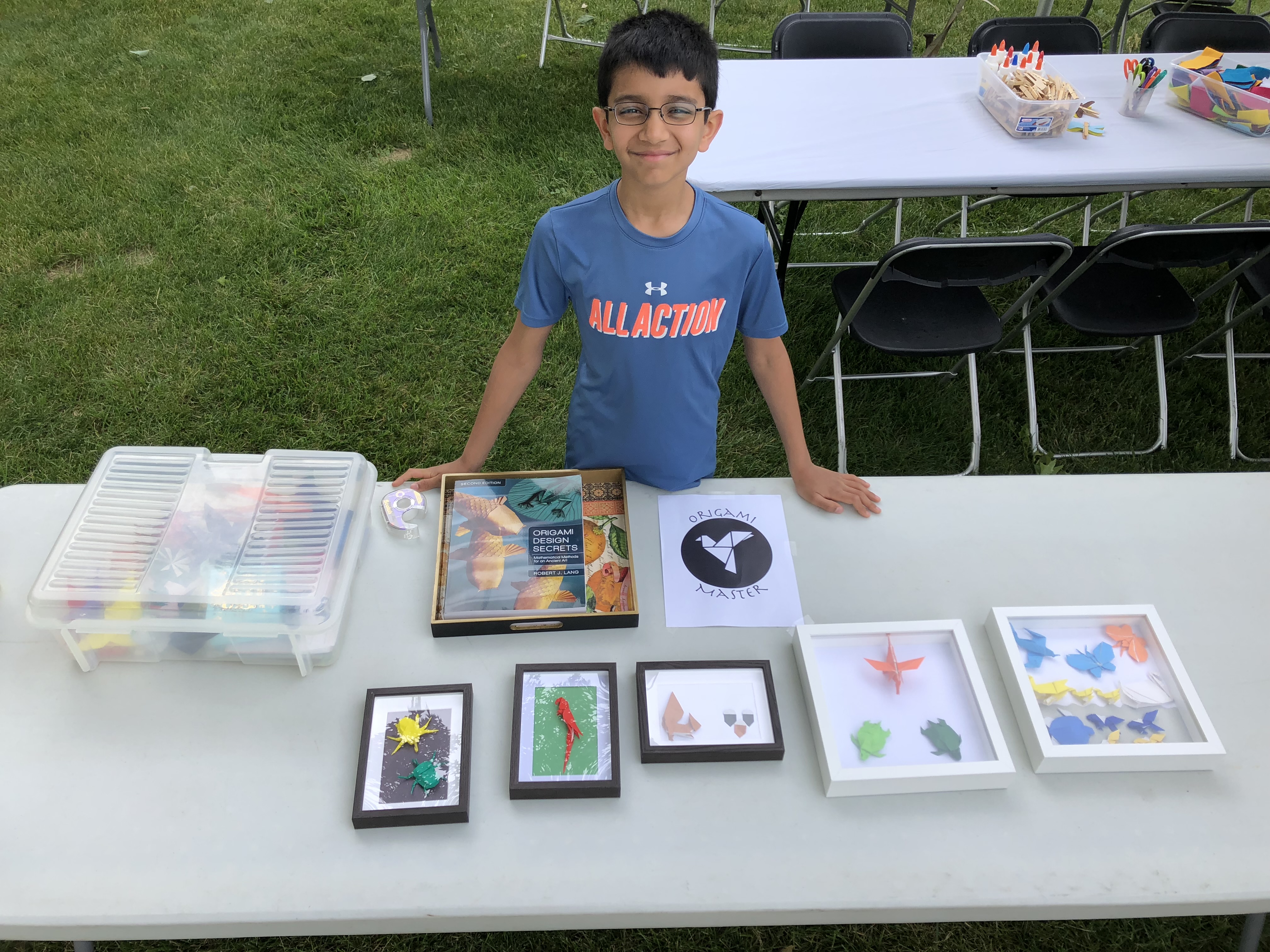
At local culture fairs, we set up origami stands where visitors can learn about the art of folding paper. These interactive displays offer a chance for people of all ages to try their hand at origami, explore its cultural significance, and take home a model they’ve created.


